
- By Nashtech PEB Team
- Jun 05, 2026
- 0 Views
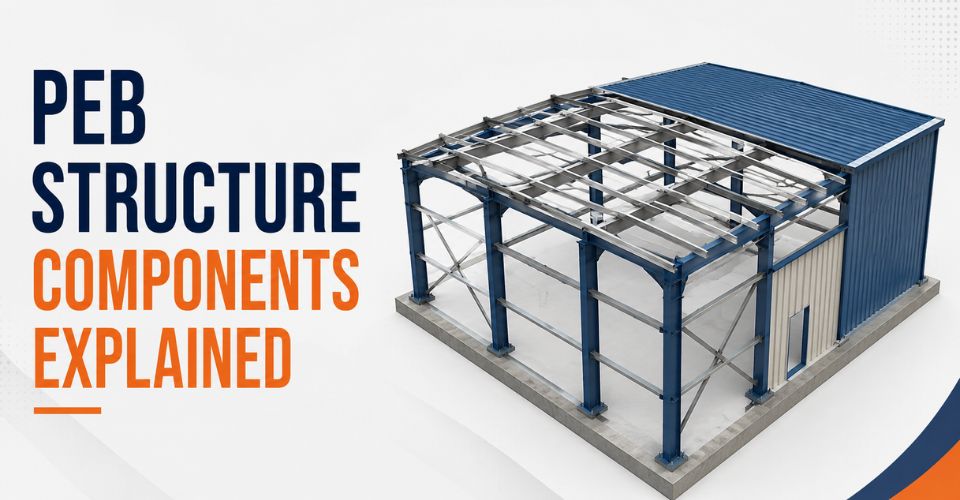
PEB Structure Components Explained: Complete Guide to Modern Steel Building Systems
Modern industrial construction has evolved quickly in the past few years. Today's businesses don't require buildings that take a long time to finish or buildings that are difficult to expand in the future. They require solutions that are quicker and durable, cost-effective and easier to maintain. This is among the main reasons pre engineered buildings (PEB) are among the most sought-after construction techniques for factories, warehouses, logistic centers, sheds for PEB Structure Components Explained: Complete Guide to Modern Steel Building Systems industrial use and commercial projects throughout India.
However, behind every solid and effective PEB structure are many essential structural components that are working together. Each component of an PEB building plays an important function in ensuring its durability, stability and operational efficiency. Knowing the importance of these PEB structure components assists businesses to make better decisions when planning industrial structures. Project managers also know the ways modern steel structures can achieve quicker construction times, stronger endurance, and long-term effectiveness in comparison to traditional construction methods.
Table of Contents
- What is a PEB Structure?
- Why Understanding PEB Components is Important
- Primary Framing – The Backbone of Every PEB Structure
- Secondary Framing – Additional Structural Support
- Roof and Wall Panels in PEB Structures
- Structural Accessories in PEB Buildings
- Fasteners and Sealants – Small Components with Big Importance
- Importance of Insulation and Weather Protection
- Why Choosing the Right PEB Company Matters
- How Modern Engineering Improves PEB Components
- Applications of PEB Structures
- Why PEB Structures are the Future of Industrial Construction
- Conclusion
- FAQs
What is a PEB Structure?
The term "Pre Engineered Building" refers to a pre Engineered Building (PEB) is a steel structure that has been designed and built prior to its arrival at the site of construction.
Instead of performing every step of construction on the site as in traditional RCC buildings, the structural components are constructed ahead of time and then assembled in a systematic manner at the time of installation.
A modern PEB building system generally includes:
- Primary framing
- Secondary framing
- Roofing and wall cladding
- Structural accessories
- Fasteners and sealants
- Insulation systems
Each of these elements work together to form an entire industrial structure.
Read More: Smart PEB Design: The Role of 3D Modeling in Modern Industrial Construction
Why Understanding PEB Components is Important
Many people think a PEB structure is simply a steel shed, but in reality, it is a carefully engineered building system.
Proper understanding of PEB building components helps in:
- Better project planning
- Choosing the right structural system
- Improving long-term durability
- Reducing maintenance issues
- Ensuring structural safety
This becomes especially important for warehouses, factories, and industrial facilities where operational efficiency depends heavily on structural quality.
Primary Framing – The Backbone of Every PEB Structure
The primary framing system is the main load-bearing part of the building.
It carries the overall structural load and provides the core strength of the PEB.
Columns
Columns are vertical steel members that transfer the building load to the foundation.
In industrial PEB structures, columns are designed to handle:
- Roof loads
- Wind pressure
- Crane loads if required
- Structural weight distribution
The quality and design of columns directly affect the stability of the building.
Rafters
Rafters are horizontally sloping members attached to columns that help support the roof structure.
They assist in spreading roof loads evenly throughout the structure. They are crucial in keeping the balance of the structure.
Contemporary PEB rafters are specifically designed to provide the strength of the structure and optimal use of steel.
Main Frames
Main frames are formed by combining columns and rafters together.
These frames create the primary skeleton of the building and are designed according to:
- Building span
- Height requirements
- Wind loads
- Seismic conditions
- Operational requirements
A properly engineered main frame ensures long-term structural reliability.
Secondary Framing – Additional Structural Support
The secondary framing system provides additional support and stability to the building.
While primary framing carries major loads, secondary members help support roofing and wall systems.
Purlins
Purlins are horizontal members installed along the roof structure.
Their main function is to support roof sheets and transfer roof loads to the primary framing system.
Modern Z and C purlins are widely used because they provide strength with optimized material usage.
Girts
Girts are horizontal members attached to wall columns.
They support wall cladding panels and help maintain wall stability during wind pressure and external loads.
Eave Struts
Eave struts are installed where the roof and wall meet.
They help connect roofing and wall systems together while improving structural alignment and rigidity.
Bracing Systems
Bracing systems are diagonal structural members used to improve building stability.
Their main role is to:
- Resist lateral forces
- Improve rigidity
- Distribute wind and seismic loads evenly
Without proper bracing, large-span industrial structures may become unstable during heavy wind or operational conditions.
Roof and Wall Panels in PEB Structures
Roofing and wall systems are important for both structural protection and building appearance.
Modern PEB roofing and cladding systems are designed for:
- Weather resistance
- Corrosion protection
- Thermal efficiency
- Long-term durability
Single-Skin Panels
Single-skin panels are steel sheets that are commonly used in warehouses and sheds for industrial use.
They are economical and appropriate for projects where the need for insulation is not as high.
Insulated Panels
Insulated panels are utilized in structures in which temperature control is essential.
These panels help improve:
- Thermal efficiency
- Indoor comfort
- Energy savings
They are commonly used in:
- Cold storage facilities
- Food processing units
- Pharmaceutical buildings
- Temperature-sensitive warehouses
Structural Accessories in PEB Buildings
Modern PEB structures include several accessories that improve building functionality and operational efficiency.
Ridge Ventilators
Ridge ventilators assist in removing hot air and increase the flow of air inside industrial buildings.
They are especially beneficial in manufacturing and factories where ventilation is essential.
Louvers
Louvers allow natural airflow inside the building while helping maintain proper ventilation.
Skylights
Skylights improve natural lighting inside warehouses and factories.
This helps reduce daytime electricity consumption and improves working conditions.
Mezzanine Floors
Mezzanine floors provide additional internal space without expanding the building footprint.
They are commonly used for:
- Storage
- Office spaces
- Equipment platforms
Canopies
Canopies are external projections used near loading areas or entrances to provide protection from rain and sunlight.
Fasteners and Sealants – Small Components with Big Importance
Many people ignore the importance of fasteners and sealants in PEB construction.
But these components are critical for:
- Structural integrity
- Weather protection
- Leak prevention
- Long-term durability
High-quality bolts, screws, and sealants help maintain building performance for years.
Importance of Insulation and Weather Protection
Industrial buildings often operate in extreme weather conditions.
Modern PEB insulation systems help improve:
- Temperature control
- Energy efficiency
- Moisture protection
- Indoor comfort
Thermal insulation materials and waterproofing membranes protect the structure from harsh environmental conditions.
Why Choosing the Right PEB Company Matters
Even the best structural components will not perform properly if design and fabrication quality are poor.
A professional PEB building company ensures:
- Accurate engineering
- Proper load calculations
- High-grade steel usage
- Precision fabrication
- Compliance with safety standards
This directly affects the long-term performance of the building.
How Modern Engineering Improves PEB Components
Today’s PEB manufacturers use advanced fabrication technologies and engineering systems to improve structural quality.
Modern fabrication facilities use:
- CNC cutting systems
- Automated welding machines
- Precision drilling equipment
- Load-testing procedures
This helps improve both structural consistency and construction speed.
Applications of PEB Structures
Modern PEB systems are widely used in:
- Industrial factories
- Warehouses
- Logistics parks
- Commercial buildings
- Cold storage units
- Aircraft hangars
- Pharmaceutical facilities
Because of its design flexibility and speed of construction, PEB technology continues growing across many industries.
Why PEB Structures are the Future of Industrial Construction
Industrial construction today focuses heavily on:
- Faster project completion
- Operational efficiency
- Expansion flexibility
- Long-term durability
- Cost optimization
PEB structures blend all of these advantages which makes them one of the most modern and practical construction methods available today.
Conclusion
Knowing PEB structural components can help businesses make better choices when planning commercial and industrial structures. Each component of the PEB structure starting from the primary roof panels and framing through to fasteners and insulation has a crucial role to play in making sure that structural stability, effectiveness, and long-term endurance.
As the industrial infrastructure continues to expand across India and the world, the need for highly-engineered pre-engineered building systems will continue to increase. Selecting the best PEB firm and top-quality elements for the structure can mean a huge difference in the quality, longevity and overall performance that the building project will achieve.
FAQs
1. What are the main components of a PEB structure?
Primary framing, second framing roofing systems accessories, insulation and fixings are primary elements.
2. What is the role of primary framing in a PEB building?
Primary framing carries the main structural load and provides overall building strength.
3. Why are insulated panels used in PEB buildings?
They can help increase the control of temperature, energy efficiency and indoor comfort.
4. Why is choosing the right PEB company important?
A reputable PEB firm ensures the correct design, top-quality materials and long-term structural stability.
Recent Post
Copyright ©2025 All Rights Reserved by nashtechpeb.com