
- By Nashtech PEB Team
- Oct 26, 2026
- 0 Views
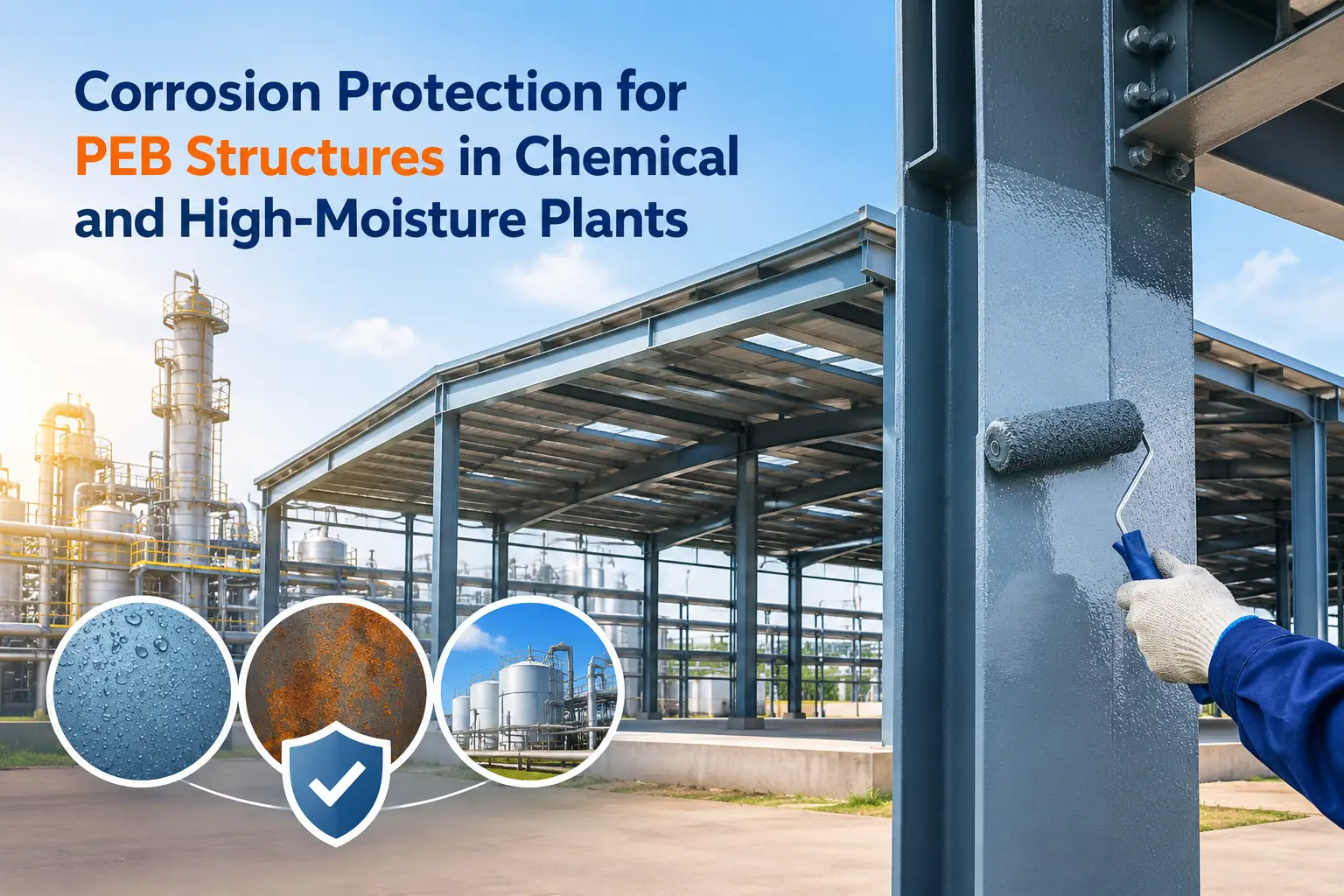
Corrosion Protection for PEB Structures in Chemical and High-Moisture Plants
Walk into an old fertilizer plant and look up. You’ll probably see rust blooming along the purlins, paint flaking near the roof sheets and a few bolts that have turned into orange crumbs. It happens faster than most owners expect. Acid fumes, damp air and daily washdowns give steel no rest.
A Pre-Engineered Building (PEB) can still be a smart choice for these plants. It goes up quickly and keeps costs under control. But corrosion has to be dealt with on paper before it’s dealt with on site. Here’s what matters most for corrosion protection for PEB structures in harsh conditions.
Table of Contents
- Know What Your Building Will Breathe
- Pick a Coating System, Not Just a Paint
- Surface Preparation Decides Everything
- Roof and Wall Sheets Take the First Hit
- Small Parts, Big Problems
- Design So Water Can’t Sit
- Protect the Base of the Building
- Inspect Before It Gets Expensive
- Conclusion
- Frequently Asked Questions
Know What Your Building Will Breathe
Before anyone talks about paint, find out what the building will actually face. A plant handling hydrochloric acid has nothing in common with a textile mill that’s just humid.
Write down the chemicals in use, whether they show up as fumes, splashes or dust, the usual humidity, the temperature and how often floors and walls get hosed down. Engineers use ISO 12944 corrosivity categories (C1 to C5, plus extra grades for offshore) to match a coating system to the environment. Most chemical and coastal plants land in C4 or C5. Be honest with your PEB manufacturer about your process. They can’t protect the steel from something they were never told about.
Read More: PEB Structure for Chemical Manufacturing Plants
Pick a Coating System, Not Just a Paint
A single coat of paint won’t survive in a chemical plant PEB building. Heavy-duty protection is built in layers. An epoxy primer (often zinc-rich) sticks to the steel and blocks moisture. A thick intermediate epoxy coat adds barrier strength. Then a polyurethane topcoat handles UV light and chemical splashes.
Hot-dip galvanizing is the other common route for primary frames. The zinc keeps protecting the steel even after a scratch, which paint can’t do. In really aggressive zones, some projects use both galvanizing and paint, known as a duplex system. It costs more upfront and tends to last far longer.
There’s no one answer here. Your chemicals, budget and the gap you can tolerate between maintenance shutdowns all push the decision one way or another.
Surface Preparation Decides Everything
Most coating failures aren’t paint failures. They’re preparation failures. If mill scale, oil, or old rust is left on the steel, the coating peels off within a couple of years, no matter how expensive it was.
Insist on abrasive blast cleaning, usually to Sa 2.5 for heavy-duty systems, before the primer goes on. And ask for dry film thickness (DFT) readings after every coat. It’s a quick check with a handheld gauge and it tells you whether the specification was really followed. If a contractor resists sharing DFT records, that’s worth noticing.
Roof and Wall Sheets Take the First Hit
Cladding is exposed to everything. Ordinary galvanized sheets can give up quickly near acid fumes. Depending on exposure, you could look at Galvalume sheets, PVC-coated or specially painted sheets, or stainless steel in small critical spots.
Plenty of chemical plants also use FRP (fibreglass reinforced plastic) sheets, especially as roof lights and sometimes as full wall panels, because they shrug off chemicals that eat metal. One tip: don’t rely on a generic resistance chart. Ask the supplier to check against the exact chemicals and concentrations in your process.
Small Parts, Big Problems
A corroded screw looks harmless. But it stains the sheet, lets water in and eventually weakens the joint. Use corrosion-resistant fasteners such as hot-dip galvanized or stainless steel, depending on how harsh the zone is. Mixing metals carelessly can set off galvanic corrosion, where one metal sacrifices itself to the other, so check compatibility.
Sealants matter just as much. Choose chemical-resistant sealants rated for your conditions and close every flashing, ridge and roof penetration properly. Moisture finds every gap and once it’s inside, it stays.
Design So Water Can’t Sit
The cheapest corrosion protection is a design that never lets moisture linger. Water trapped on ledges, in pockets, or inside hollow sections attacks steel quietly for years.
Ask for smooth, self-draining details. Avoid flat surfaces where water pools. Seal or drain hollow sections and make sure the roof has enough slope with proper gutters and downpipes. Inside humid plants, condensation is a sneaky problem. Good ventilation, along with insulation and vapour barriers, stops droplets from forming on the underside of sheets and dripping onto frames and equipment. It’s a small detail that adds real years to the structure.
Also Read: Insulation Options for PEB Warehouses
Protect the Base of the Building
The bottom of a column is where spills, washdown water and chemical splashes end up. Anchor bolts, base plates and column bases tend to fail first.
Raise columns are based on concrete pedestals so they stay out of standing water. Coat or grout base plates carefully and use chemical-resistant flooring where spills are likely. Acids attack concrete too, so ask your engineer about protecting it with suitable linings or sealers.
Inspect Before It Gets Expensive
Even a great system needs attention. Check coatings, fasteners, sealants and drainage points at least once or twice a year and more often in severe zones.
Early repairs are cheap. Touching up a scratched patch takes an afternoon. Recoating a heavily rusted frame can mean shutting part of the plant. Keep a record of the original coating system and colour so repairs match properly. A simple maintenance schedule, written down and actually followed, can double the useful life of the building.
Conclusion
Protecting a PEB structure in a chemical or high-moisture plant isn’t about one miracle coating. It’s a handful of decisions that work together: knowing your environment, choosing the right system, preparing the steel well, picking resistant cladding and fasteners, designing for drainage and keeping up with maintenance.
Spending a little more at the design stage nearly always costs less than repairing corroded steel later. Talk to an experienced manufacturer early, share your process details and get every specification in writing.
Frequently Asked Questions
1. Can PEB buildings be used in chemical plants?
Yes, provided the steel, coatings and cladding are chosen for the specific chemicals and humidity involved and the building is maintained properly.
2. What is the best coating for a PEB in a corrosive environment?
It depends on the environment. Many projects use an epoxy primer with a polyurethane topcoat, while others prefer hot-dip galvanizing or a duplex system.
3. How long does corrosion protection last on a PEB building?
There’s no fixed number. Lifespan depends on the coating system, how aggressive the environment is and how well the building is inspected and touched up.
4. Are FRP sheets better than metal sheets in chemical plants?
Often they are, since FRP resists many chemicals that attack metal. Always confirm compatibility with your actual process chemicals first.
5. Can an existing PEB building be protected against corrosion later?
In many cases, yes. Cleaning, recoating and replacing damaged fasteners or sheets can extend its life, though prevention during design is usually cheaper.
Recent Post
Copyright ©2025 All Rights Reserved by nashtechpeb.com